
A Century on Wheels: How Car Camping Has (Barely) Changed

A Treasury of Outdoor Life (1975), edited by William E. Rae, combines some of the most loved features and articles from the popular magazine’s publication history- spanning the late 1800s through the 1970s. This volume highlights great adventures such as trout fishing in Washington, brown bear encounters in Alaska, and moose hunting in the northern wilderness. It also includes fascinating visual history, featuring magazine covers and advertisements from each decade.
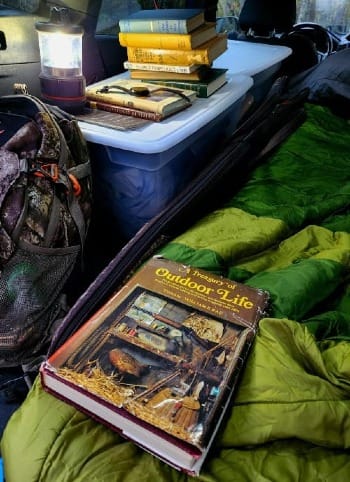
One article that caught my attention was “Camping with a Motor Car” by A. Whiteman, first published in Outdoor Life in December of 1910.
Whiteman opens by acknowledging the “touring fever that hit the United States in the summer of 1910,” describing an “irresistible desire to travel by motor car and see the country.” This reflection came only a few short years after motor cars first hit American roads. He noted that the “constant want to reach good hotels” was becoming a thing of the past thanks to the growing popularity of the automobile camping trip.
More than a century later, I can attest that the automobile camping trip is still "formidable". Unless an outdoorsman chooses a backpacking adventure, a vehicle is often the home base for a modern camping trip- whether it’s an RV, a camper van, sleeping inside an SUV or truck bed (my personal preference), or simply loading up supplies and pitching a tent wherever the road leads.
Whiteman’s 1910 article even detailed an “ideal party” and “camping equipment” checklist for car campers of the time. To compare, he suggested that 40 or 50 horsepower was more than enough for touring, while today’s average SUV has roughly 180 horsepower. He also recommended at least three companions for a trip, though solo camping has since become quite popular.
Despite technological leaps, most of his equipment recommendations still hold up today. With a few modern updates, his list could serve any modern outdoorsman just as well.
Whiteman’s 1910 Car Camping List
(As published in Outdoor Life, 1910)
• Frazier Canoe Tent (8¾ × 8¾)
• A-Tent
• Campstools
• Cots (or pneumatic mattresses)
• Blankets
• Ponchos
• Pillows
• Waterproof duffel bags
• Canvas water bottle
• Folding water bucket
• Water basin
• Hatchets
• Aluminum cooking set
• Alcohol stove
• Canned goods
• Refrigerator basket
• Thermos bottles
• Electric flashlights
• Camera
• Fishing tackle
• Large assortment of straps
• Several tarpaulins
• Personal baggage
• Auto tools
My Additions to the List
• Modern Tent (For camping outside the vehicle)
• Sleeping pad
• Sleeping bag
• Nalgene or reusable water bottle
• Water filtration system
• Propane stove
• Dehydrated camp meals
• Cooler
• First aid kit
• Plenty of knives
• Extra boots
• Shower wipes
• Ample drinking water
• Firewood
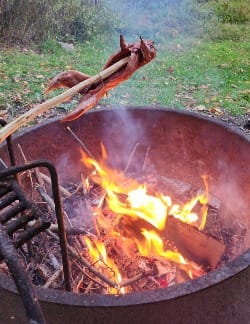
Some of these items simply modernize their 1910 counterparts- like swapping a refrigerator basket for a cooler. Depending on the season, my list might also include a hunting rifle, ammunition, and hunter’s orange. Camping during hunting season can turn a successful day in the field into near-instant gratification with a fresh campfire meal (as pictured below).
In truth, the car camping checklist hasn’t changed much in over a century. Even Whiteman’s advice from 1910 still rings true: “Make friends wherever you go,” “Do not undertake to cover too much distance every day,” and above all, “The outdoor life is just the thing we all need.”